
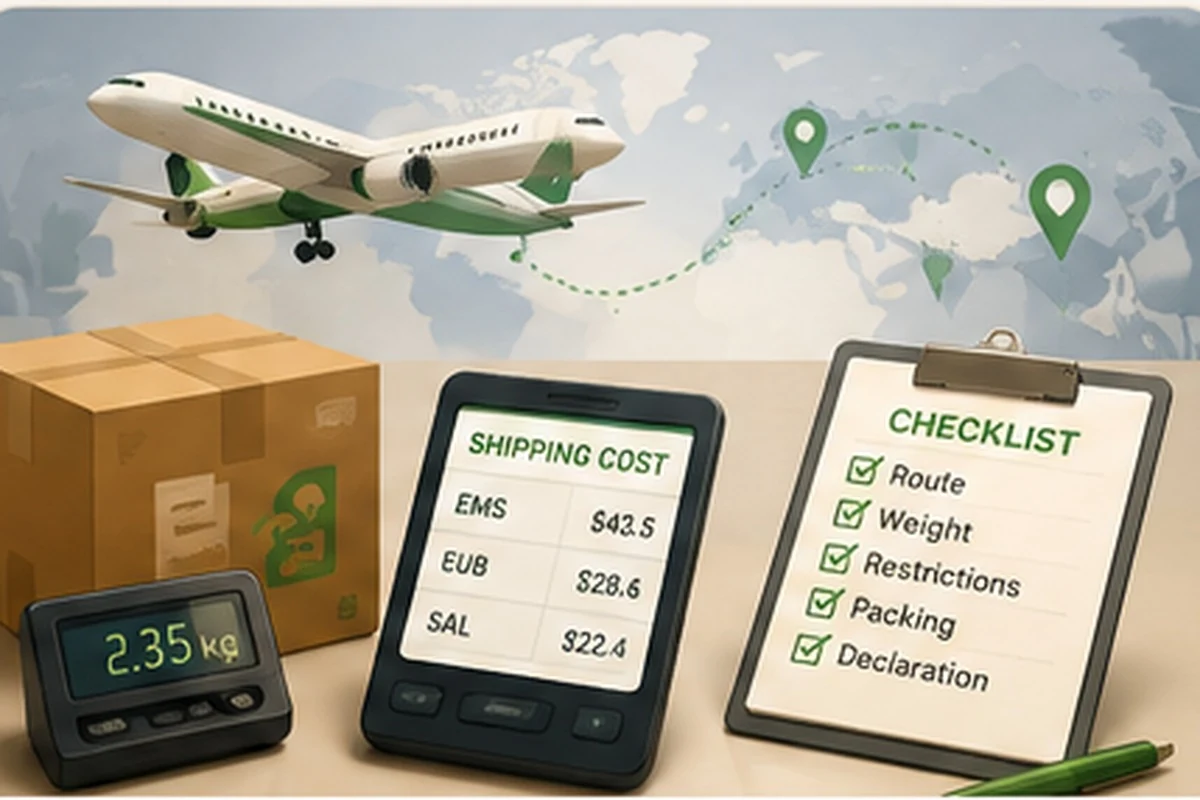
CSSBuy Shipping Cost Guide 2026: Chargeable Weight, Routes and Parcel Planning
International shipping is where an inexpensive haul can become expensive, delayed, or impossible. The usual mistake is to treat freight as a final checkout number that appears after shopping is finished. A better approach is to design the parcel from the first purchase. Every item brings not only price and weight, but also volume, fragility, restrictions, packaging choices, customs exposure, and a share of the final chargeable weight.
CSSBuy’s official Buy For Me workflow explains that the international shipping deposit is calculated from estimated product weight, selected shipping method, and destination. After packing, the final fee is calculated from the package size and weight verified by the shipping company. If the final charge differs from the deposit, the difference can be returned to the user’s CSSBuy account after dispatch. That means the number shown before packing is an estimate, not the final accounting result.
Think in chargeable weight, not scale weight alone
Carriers generally charge by whichever measure their route rules treat as billable. Dense items are often driven by actual weight. Bulky but light items may be driven by volumetric weight, a conversion of parcel dimensions into a billing weight. CSSBuy’s help material specifically discusses volume-weight calculations and notes that oversized goods may not fit a standard DHL bag. The practical lesson is simple: empty space can cost money.
Record three values for every item when possible: product weight, packed dimensions, and packaging type. A puffer jacket may weigh less than shoes but occupy more space. A shoe box may double the parcel volume relative to the shoes alone. A rigid handbag can be light yet resist compression. You do not need a perfect forecast; you need enough information to identify which items control parcel size.
Classify items before combining them
Give each purchase a shipping profile. Compact standard goods include folded T-shirts, belts, small accessories, and many shoes without boxes. Compressible goods include hoodies, soft jackets, and textiles. Rigid goods include structured bags, collectibles, and boxed footwear. Fragile goods include glass, ceramics, and delicate hardware. Restricted or route-sensitive goods may include batteries, liquids, fragrances, magnets, powders, or products limited by particular carriers.
This classification matters more than the date of purchase. Two items bought together do not necessarily belong in the same parcel. A fragrance can reduce route options for an otherwise simple clothing shipment. A fragile ornament may require reinforcement that adds weight to every item around it. Build parcels by compatible logistics profiles, not merely by warehouse arrival order.
Use the official calculator as a scenario tool
CSSBuy provides a cost calculator and shipping guide, and its app advertises on-the-go shipping-price calculation. Use the calculator several times, not once. Run a base scenario with the estimated total weight. Then test a heavier bracket, a larger volume, and an alternative route. The purpose is not to predict the exact fee to the last unit. The purpose is to understand sensitivity: how much does the estimate change if the parcel becomes one kilogram heavier or crosses a dimensional threshold?
Save the date of each estimate because rates and route availability can change. A calculation made before a holiday, fuel adjustment, or carrier policy update may no longer describe the submission-day options. Never turn an old screenshot into a promise.
Separate the four layers of cost
CSSBuy’s official fee explanation describes total cost as product price, China freight, international freight, and service fee. For shipping analysis, split the logistics layer further. First is domestic freight from seller to warehouse. Second is optional warehouse work such as packaging removal or reinforcement. Third is international freight. Fourth is potential destination-side cost, including taxes, duties, handling, or last-mile charges where applicable.
This separation prevents false savings. A seller offering a lower item price may charge higher domestic delivery. A route with a lower freight estimate may exclude insurance or have restrictions that force repacking. A tax-included route may be more expensive upfront but easier to budget than a route with uncertain destination charges. Compare total exposure, not one highlighted number.
Design packaging around the product’s failure mode
CSSBuy advertises services including packaging removal, vacuum packaging, reinforced packaging, label cutting, and insurance. Each option solves a different problem. Packaging removal reduces volume and weight but may remove structural protection or collectible packaging. Vacuum packing can be effective for soft clothing, yet it may crease padded or structured garments. Reinforcement can protect fragile items but adds materials and may increase chargeable weight. Label cutting changes the product and should never be selected casually.
Before choosing an option, ask what failure you are preventing. For ordinary T-shirts, compression may be useful. For a rigid leather bag, shape retention is more important. For boxed sneakers, decide whether the box has personal value and whether removing it materially changes the parcel bracket. For glass or electronics, reinforcement and separation may matter more than volume reduction.
Do not buy insurance without reading the coverage logic
Insurance is a risk-transfer tool, not a guarantee that every loss, delay, seizure, damage type, or declaration choice will be paid. CSSBuy lists insurance among available additional services, and the company has also published its CSSecure plan. Before purchasing, review the current eligible routes, coverage basis, excluded events, evidence requirements, claim deadline, declared value rules, and compensation limit.
Match insurance to the risk you cannot comfortably absorb. A low-value parcel may not justify every add-on. A concentrated high-value parcel can create a loss large enough to change the decision. Splitting a haul can reduce concentration risk, but may increase total base freight. There is no universal answer; model both options.
Route restrictions are a product-selection issue
CSSBuy’s official workflow warns that some items are restricted for certain delivery methods and that recommended methods are presented according to the parcel. The restrictions page and shipping guidance should be checked before buying sensitive items, not after warehouse arrival. If the only eligible route is expensive, the bargain may disappear.
Create a “route eligibility” column in your spreadsheet. Mark batteries, liquids, fragrance, magnets, food, powders, long items, and other potentially sensitive categories. The exact rules vary by destination and carrier, so this column is a warning to verify, not a legal conclusion. When uncertain, ask customer service through the order or parcel note system before committing.
Use parcel rehearsal before submission
Before clicking submit, create a parcel rehearsal. List every item, weight, packaging decision, restriction, declared value strategy, preferred route, backup route, and reason for grouping. Then ask three questions. If the parcel is measured larger than expected, can you still afford it? If the preferred route disappears, is the backup acceptable? If one item blocks the route, would you remove it or create a second parcel?
This rehearsal turns last-minute surprises into predefined choices. It also makes communication with support more efficient because you can identify the item or rule causing the problem.
Understand deposit reconciliation
At submission, CSSBuy collects an international shipping deposit based on estimates. The warehouse consolidates and packs the selected items, reinforces or removes packaging as requested, and verifies the parcel. The carrier’s size and weight determine the final charge. If the deposit was higher, the difference may return to the CSSBuy balance. If the final amount is higher, additional payment may be required according to the current process.
Keep four records: estimated charge, deposit paid, final parcel dimensions and weight, and final freight. Over several shipments, these records reveal how accurate your planning assumptions are. If your clothing parcels repeatedly become volumetric, adjust future estimates. If shoe boxes consistently increase a bracket, decide their value before ordering.
Tracking is an exception-management system
CSSBuy says parcels can be tracked in the User Center under My Parcel, and customer service directs parcel questions through the relevant parcel’s Add Note function. Tracking does not make the parcel move faster, but it establishes the last confirmed event. Record dispatch date, first carrier scan, export event, destination arrival, customs status, handoff, and delivery.
Do not panic over every quiet period. Routes update at different milestones. Compare the silence with the route’s published expectations and contact support when it becomes exceptional. Use the parcel number and concise facts.
Customs and declaration require realistic expectations
No agent can guarantee that a parcel will avoid inspection, tax, delay, or seizure. Destination rules belong to the importer’s country and can change. Research local thresholds, prohibited goods, documentation, and tax treatment. Do not confuse a community anecdote with a binding customs rule.
An implausible declaration can create questions or reduce insurance recovery. Follow current platform instructions and applicable law rather than copying another buyer.
A practical shipping worksheet
- Item profile: actual weight, dimensions, compressibility, fragility, and restrictions.
- Packing plan: keep or remove retail packaging, vacuum pack, reinforce, separate, or protect shape.
- Route plan: preferred line, backup line, estimated time, restrictions, tracking, and insurance eligibility.
- Cost plan: domestic freight, services, estimated international deposit, final freight, and possible destination costs.
- Risk plan: parcel value, concentration, insurance coverage, customs exposure, and acceptable delay.
- Reconciliation: final dimensions, final weight, balance refund or extra payment, delivery result, and lessons learned.
Frequently asked questions
Why did the final shipping fee differ from the estimate?
The estimate uses expected weight, method, and destination. The final fee uses the packed parcel’s verified size and weight and the carrier’s billing rules.
Is removing shoe boxes always cheaper?
It often reduces volume, but the saving depends on the route’s chargeable-weight method and the rest of the parcel. It also removes protection and packaging value.
When is vacuum packaging useful?
It is most useful for compressible textiles. It is less suitable for structured clothing, padded items that may deform, or goods needing airflow or shape protection.
Should I combine everything into one parcel?
Not automatically. Compare base freight savings with restriction conflicts, concentrated value, customs exposure, and packing compatibility.
Does the fastest route always provide the best value?
No. Value depends on price, tracking, restrictions, delivery reliability, insurance, tax treatment, and how urgently you need the parcel.
Can CSSBuy guarantee no customs tax?
No universal guarantee should be assumed. Customs decisions depend on destination law, contents, declaration, and inspection.
What should I do if tracking stops updating?
Check the normal update pattern for the selected route, record the last scan, and use the parcel’s Add Note or current customer-service channel when the delay becomes exceptional.
What is the best shipping habit?
Design the parcel before purchasing the final item. When you know the likely route, restrictions, packing method, and cost sensitivity, shopping decisions become much more rational.
Editorial note: This guide was fact-checked against CSSBuy’s official Buy For Me process, fee explanation, cost calculator references, Ship For Me services, volume-weight guidance, app information, service page, and parcel workflow in July 2026. Rates, routes, restrictions, insurance, customs treatment, and service options can change. Verify live information before parcel submission.